
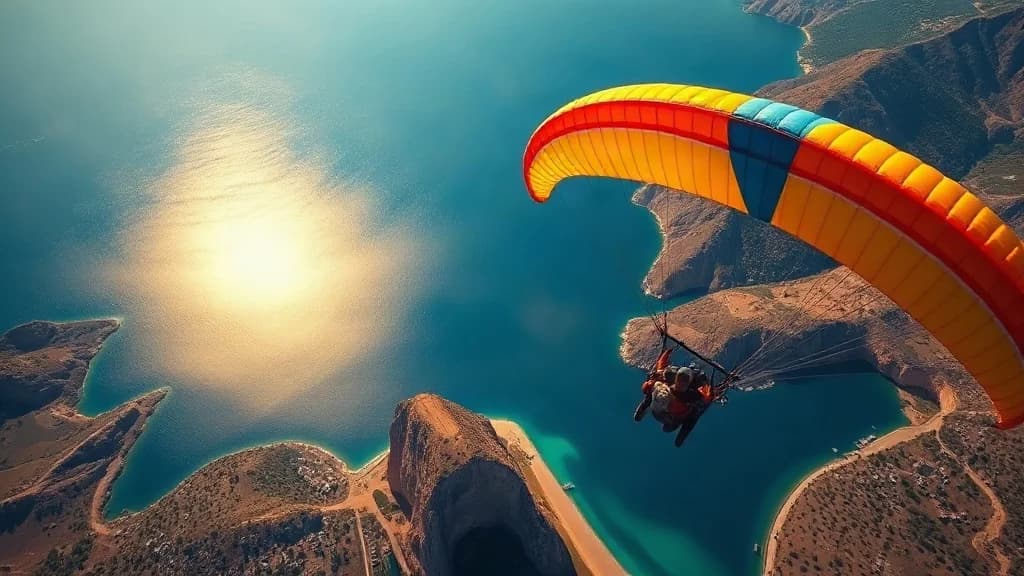
Planning your first tandem paragliding flight and wondering what your body is actually going to experience up there? You're not alone — understanding the physical sensations of paragliding is one of the most common questions we hear at Atmos Paragliding. From paragliding ear pressure in Oludeniz to the flutter in your stomach during thermals, this guide breaks down exactly how paragliding feels physically, system by system, so you can step onto Babadağ Mountain in 2026 feeling informed, confident, and ready to fly.
Will the Altitude Change Hurt Your Ears During a Paragliding Flight in Oludeniz?
Your ears may feel a mild pressure sensation as you descend from Babadağ Mountain's launch point at 1,960 metres — but for the vast majority of passengers, this is brief, manageable, and easily relieved by swallowing or yawning.
This is the same mechanism you experience when a plane descends for landing or when you drive down a steep mountain road. As your altitude drops during the 45-minute glide toward the famous Blue Lagoon, the air pressure around you gradually increases, and your ears need to equalise. The good news is that paragliding descends far more slowly and gently than an aircraft, giving your ears plenty of time to adjust naturally.
How to Equalise Ear Pressure During Your Flight
- Swallow repeatedly — this is the simplest and most effective method
- Yawn widely — opens the Eustachian tubes and allows pressure to balance
- Pinch your nose and gently blow — the classic Valsalva manoeuvre, used by divers and frequent flyers
- Chew gum — ask your pilot to bring a piece if you know you're ear-sensitive
If you have a current ear infection, a perforated eardrum, or severe sinus congestion, please let our team know before your flight. These conditions can make pressure changes genuinely uncomfortable and we may recommend rescheduling until you're fully recovered.
What Does the Takeoff Feel Like on Your Body When You Launch from Babadağ?
Takeoff is the most physically intense moment of the entire flight — a short, brisk run of five to eight steps, a sudden lift as the glider fills with air, and then your feet leave the ground. Most people describe it as a rush of pure exhilaration rather than fear.
Your adrenaline spikes sharply in the seconds before and during launch. Your heart rate jumps, your senses sharpen, and many passengers let out an involuntary gasp or laugh the moment they're airborne. Within 10 to 15 seconds of leaving the mountain, that rush typically softens into a profound sense of calm — because once you're flying, there's nothing to brace against. You're simply floating.
What Your Body Does at Launch — Second by Second
- 0–3 seconds: Heart rate surges, adrenaline floods your system, legs move instinctively
- 3–8 seconds: Feet leave the ground, stomach briefly registers the lift (similar to the top of a swing)
- 8–20 seconds: The harness takes your full weight — you feel seated and secure, not dangling
- 20+ seconds: Breathing slows, muscles relax, the view of Ölüdeniz opens up below you
Our pilots launch dozens of passengers every day and are trained to guide you through the run calmly and clearly. You won't be thrown off a cliff — the launch at Babadağ is a controlled, well-practised process.
Do Most People Feel Nauseous or Dizzy During a Tandem Paragliding Flight?
Nausea is rare during a standard tandem paragliding flight in Oludeniz. The vast majority of passengers complete the full descent feeling completely comfortable — many even fall asleep in the harness.
Paragliding is fundamentally different from activities that commonly cause motion sickness, like boats or car journeys, because your visual horizon and your sense of movement stay aligned. You can see exactly where you're going and feel the gentle shift in direction — there's no sudden disconnect between your eyes and your inner ear that typically triggers nausea.
Who Is More Likely to Experience Mild Dizziness?
- Passengers who look straight down for extended periods during acrobatic manoeuvres
- Those who are prone to motion sickness in cars, boats, or planes
- Passengers who didn't eat or drank too much before the flight
- Anyone dehydrated from a hot day in the Mediterranean sun
Our recommendation: Eat a light meal 1–2 hours before your flight, stay well hydrated, and let your pilot know if you feel any queasiness mid-flight. We can adjust the flight style to keep things smooth and straight.
How Does Your Stomach Feel During Thermals and Altitude Drops in Paragliding?
During thermals — warm air columns that rise from the sun-heated land below — you'll feel a gentle upward push, almost like a lift in an elevator. During altitude drops or when your pilot steers away from a thermal, you may briefly feel a soft "drop" sensation in your stomach, similar to going over a gentle hill in a car.
This is the physical sensation most often compared to a mild rollercoaster moment, but it is significantly gentler. Babadağ and the Ölüdeniz coastline generate reliable, consistent thermals — particularly during the summer months — which is one of the reasons this is rated among the world's top paragliding destinations. Our experienced pilots read these thermals expertly, using them to extend your flight time while keeping the ride smooth.
What Thermals Actually Feel Like
- A soft, sustained upward push — not a jolt
- Slight tilting of the glider as the pilot banks into the thermal column
- A gentle spiralling sensation if the pilot circles to gain altitude
- The stomach flutter lasts a second or two and then settles
If you specifically want to avoid any stomach sensations, simply tell your pilot before takeoff and they'll prioritise a smooth, gliding descent over thermal-riding manoeuvres.
Is It Normal for Your Heart to Race During a Paragliding Flight in Oludeniz?
Absolutely — a racing heart before and during takeoff is completely normal and expected. This is your body's natural adrenaline response to a novel, high-stimulation experience, not a sign that something is wrong.
Your heart rate typically peaks during the launch run and the first 30 seconds of flight. For most people, it settles back toward a calm, elevated-but-comfortable rate within two to three minutes once the glider is flying steadily. Many passengers describe a shift from "excited terror" to "peaceful wonder" that happens faster than they expected.
This adrenaline release is actually part of what makes paragliding so addictive — the combination of physical excitement at launch followed by the deep calm of open-sky flight is a uniquely powerful emotional contrast.
What Happens to Your Body During the Full 45-Minute Descent to the Beach?
Over the course of a full tandem flight, your body moves through several distinct physical phases — from adrenaline and alertness at launch, through relaxed floating during the mid-flight glide, to a gentle return of focus as you approach the Ölüdeniz beach landing zone.
The Physical Timeline of a Tandem Paragliding Flight
Minutes 0–5 | Launch and Initial Climb
- Adrenaline is high, senses are heightened
- Heart rate elevated, breathing fast
- Eyes adjusting to the panoramic altitude perspective
Minutes 5–25 | Mid-Flight Glide
- Body fully relaxes into the harness
- Heart rate drops to a comfortable cruising level
- Many passengers feel a meditative stillness — this is the "paragliding calm" regulars talk about
- Ears may begin to register subtle pressure changes
Minutes 25–40 | Thermal Riding and Coastal Glide
- Gentle stomach sensations if thermals are active
- The Blue Lagoon and beach come into clear view below
- A second wave of excitement as the ground grows closer
Minutes 40–45 | Landing Approach
- Pilot descends toward the beach landing zone
- Legs come forward instinctively as you prepare to land
- Landing is a smooth skid or a gentle stand-up — not a jolt
Can Paragliding Affect People with High Blood Pressure or Heart Conditions?
For most people with well-managed, mild high blood pressure, tandem paragliding in Oludeniz is considered safe — but we strongly recommend consulting your GP or cardiologist before booking if you have any active cardiovascular condition.
Paragliding altitude sickness from Babadağ Mountain is not a significant concern for most passengers. At 1,960 metres, the altitude is well below the threshold where acute mountain sickness typically begins (usually above 2,500 metres). You are transported by cable car or vehicle to the launch site rather than climbing, so you arrive without physical exertion.
Who Should Seek Medical Clearance Before Flying
- Anyone with a diagnosed heart condition or arrhythmia
- Passengers with uncontrolled high blood pressure
- Those who have had a stroke or cardiac event in the past 12 months
- Pregnant passengers (we do not recommend flying during pregnancy)
- Anyone with severe anxiety disorders that could be exacerbated by adrenaline response
If you're uncertain, reach out to our team before booking — we'd rather help you make an informed decision than have you arrive with unresolved concerns.
How Cold Does It Get at Altitude and What Should You Wear for Comfort?
At 1,960 metres on Babadağ Mountain, the temperature is typically 8–12°C cooler than down in Ölüdeniz village — so if it's a warm 30°C beach day below, expect around 18–22°C at the launch site. During flight, wind chill adds an additional cooling effect.
This is particularly important for passengers flying in a swimsuit or light summer clothing. The Mediterranean warmth at sea level is deceptive — you'll feel the chill once you're airborne.
What to Wear for Your Tandem Paragliding Flight
- Closed-toe shoes with ankle support — trainers or light hiking shoes (no flip-flops or sandals)
- A light jacket or hoodie — even in summer, bring a layer for the altitude
- Comfortable trousers or leggings — shorts are fine in summer but you may feel the wind
- Sunglasses — the glare at altitude is strong and the view deserves to be seen clearly
- Secure any loose items — hats, scarves, and earphones should be pocketed before launch
Our team provides full harness equipment and a safety briefing on the day.
What Physical Symptoms Should You Tell Your Pilot About Before Takeoff?
Always tell your pilot if you're experiencing any of the following before your flight — this isn't about disqualifying you, it's about making sure your experience is tailored to keep you comfortable and safe.
Tell Us Before You Fly If You Have:
- Ear pain, sinus infection, or blocked ears — pressure changes will be more pronounced
- A history of motion sickness — we can adjust manoeuvres and pace
- Recent surgery (within 6 weeks) — particularly abdominal, ear, or eye surgery
- Anxiety or panic disorder — our pilots are experienced at managing nervous passengers calmly
- Back or neck pain — harness positioning can be adjusted for comfort
- Vertigo or inner ear conditions — worth discussing to set expectations
- Any medications that cause drowsiness or dizziness — these can interact with the experience
Our pilots are not just trained to fly — they're trained to read their passengers. An honest two-minute conversation before takeoff makes for a dramatically better flight.
Ready to Feel It for Yourself?
Understanding how paragliding feels physically takes away the mystery and replaces it with anticipation. The reality is that for most healthy adults, a tandem paragliding flight over Ölüdeniz is one of the gentlest, most awe-inspiring physical experiences you can have — a brief adrenaline surge at launch, followed by 40 minutes of floating calm above one of the most beautiful coastlines on earth.
The paragliding ear pressure in Oludeniz is mild and easily managed. The stomach flutter during thermals lasts seconds. The racing heart settles into wonder. And the view of the Blue Lagoon from 1,960 metres? That part, no guide can fully prepare you for.
Book your 2026 tandem paragliding flight with the experts at atmosparagliding.com — our team is here to answer every question, calm every concern, and give you the flight of your life.