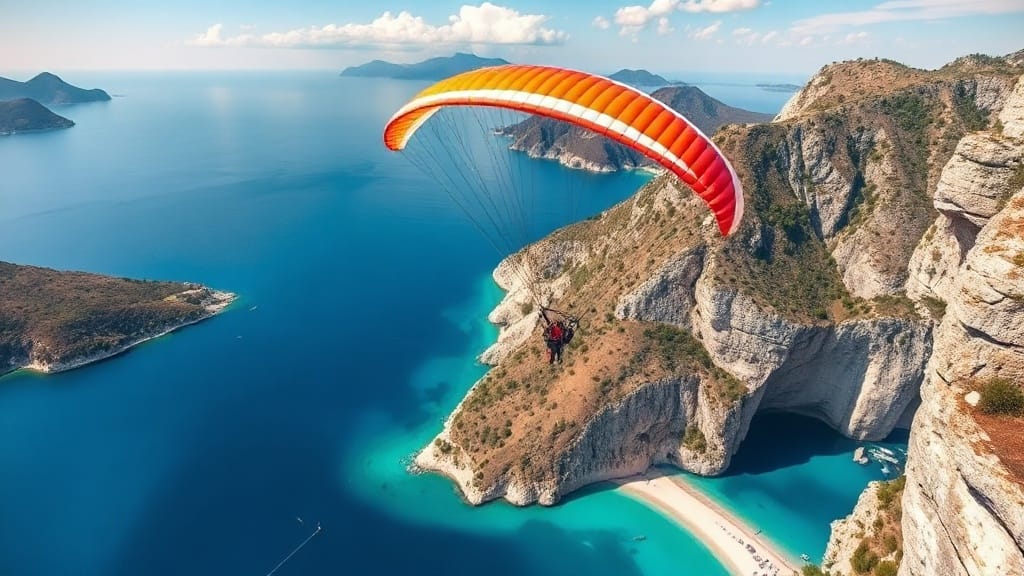
Detailed guide for pilots flying into Oludeniz.
In light or nil wind, the glider keeps more speed over the ground on final approach. Landings are still safe and routine — they simply need more space and a longer, flatter final glide.
Ölüdeniz's long beach landing zone is ideal for this: pilots use the extra length to bleed off speed gradually before a running or sliding touchdown.
Pilots set up a longer final, hold the glider in ground effect to wash off speed, then apply a strong, progressive flare at exactly the right moment. Timing replaces headwind as the tool that makes the landing soft.
For tandem landings in light wind, passengers are usually briefed to be ready for a few running steps — or to slide in on the harness seat, which is just as safe.
Typically in the early morning and around sunset, when the daily sea-breeze cycle is at its weakest. These are also the smoothest, most scenic times to fly.
Light-wind evenings are the classic setting for sunset flights — glassy air, golden light and a calm, floaty landing on the beach.
Sometimes a few steps, yes. Your pilot briefs you in advance; many light-wind tandem landings finish with a gentle slide on the harness instead — both are completely normal.
Light-wind mornings and evenings offer the smoothest air, which many first-timers prefer. The landing needs slightly more space, but the beach zone has plenty.
Usually yes — by sunset the sea breeze has faded, giving calm air and soft light. It is one of the most popular flight slots we offer.
Tandem flights all year round — daily in season (April–October), weather permitting in winter — one fixed $150 all-inclusive price. Book online or contact us directly.
