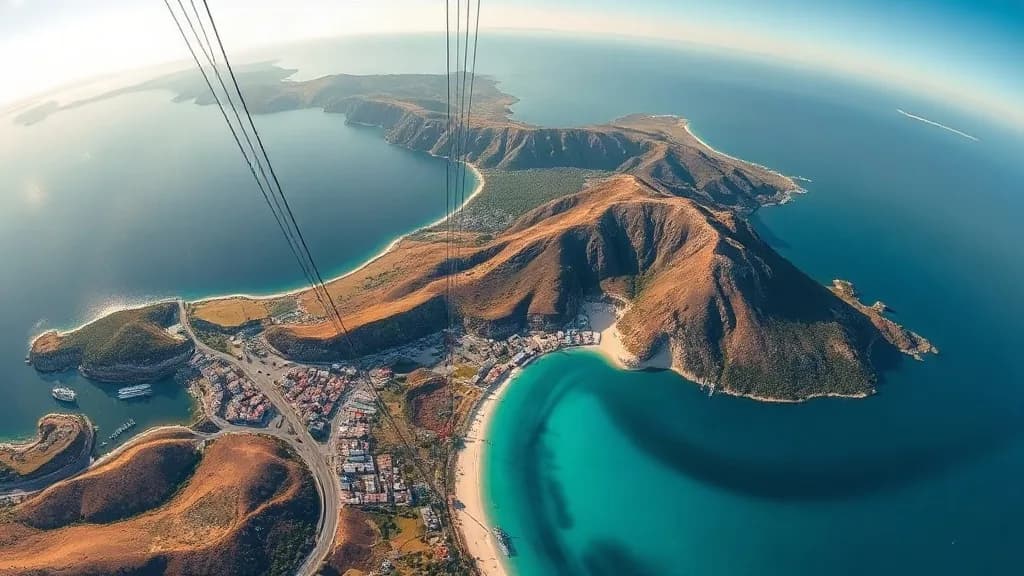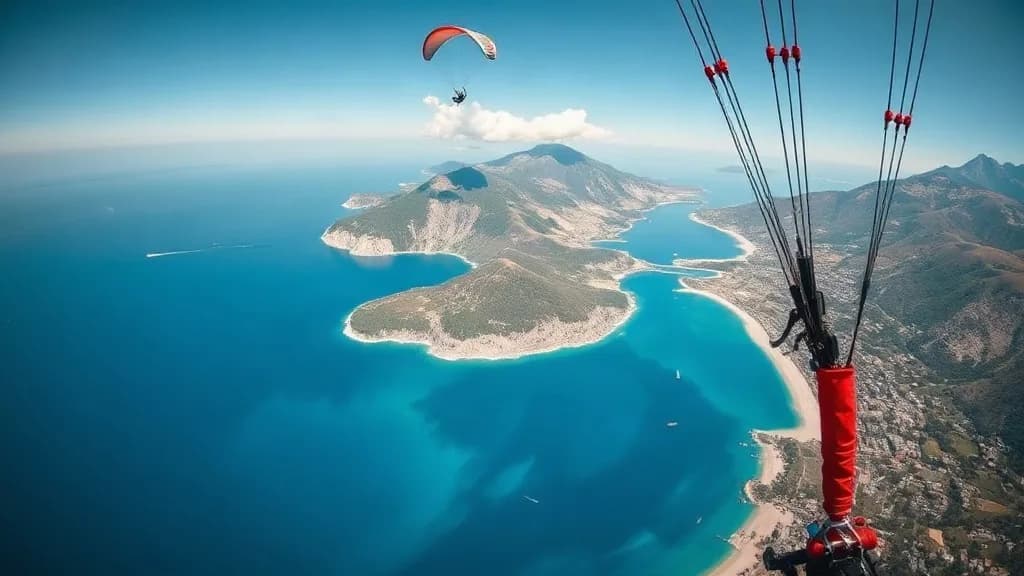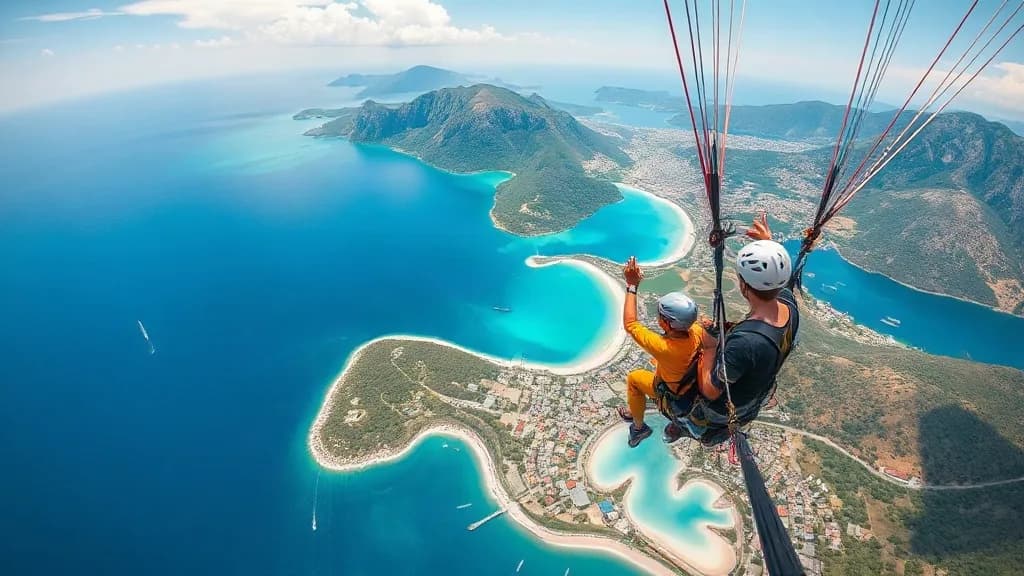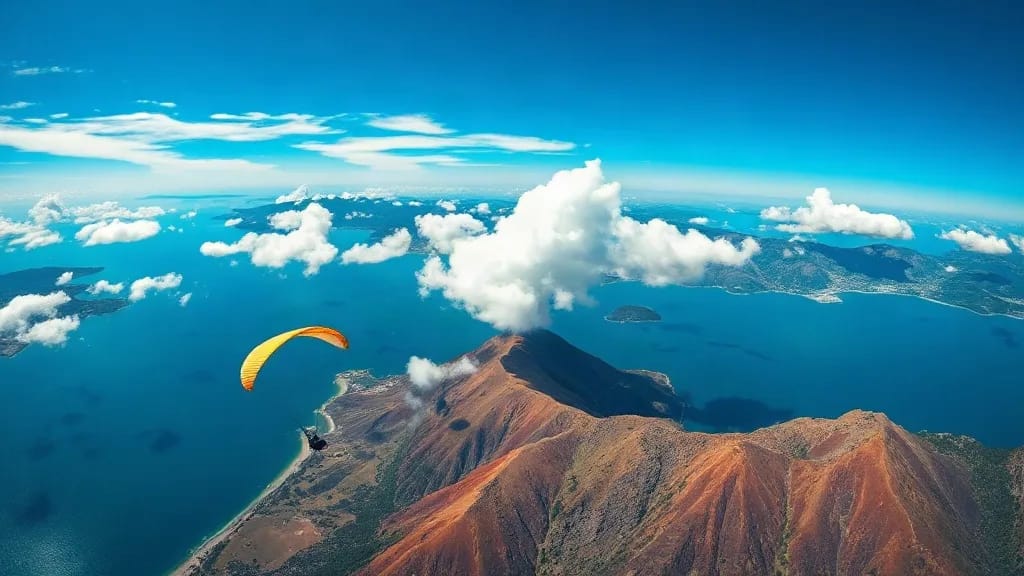
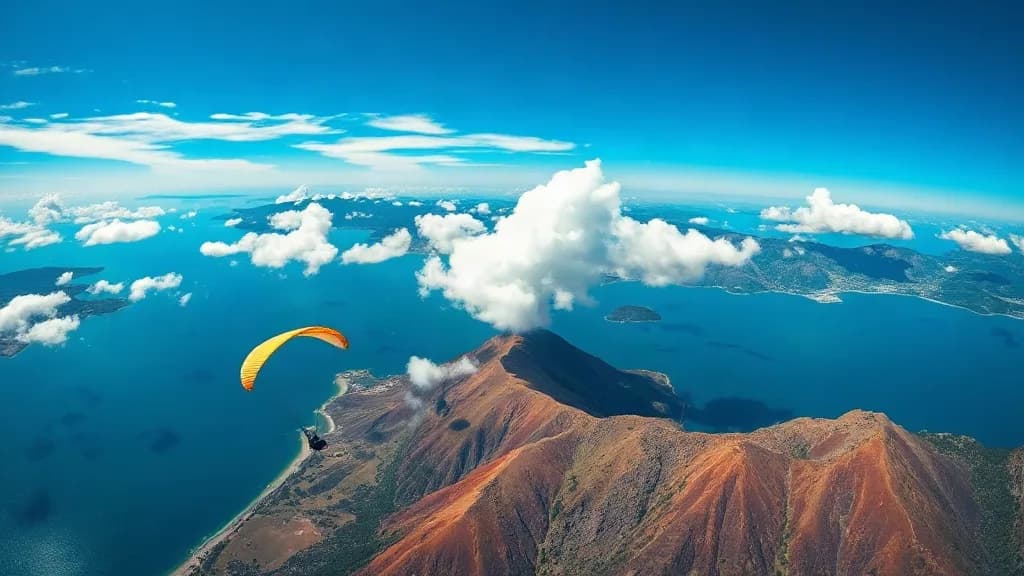
One of the most common questions we receive at Atmos Paragliding is whether paragliding Ölüdeniz after rain is still possible — and the good news is that in many cases, it absolutely is. Ölüdeniz's unique Mediterranean microclimate, combined with Babadağ Mountain's towering 1,960m launch site, means weather conditions can shift quickly in either direction. Understanding how our pilots read post-storm skies is the key to not missing your flight. Here's everything you need to know before your booking day arrives.
How Long After Rain Can You Paraglide in Ölüdeniz?
In most cases, paragliding at Ölüdeniz can resume as little as 2–4 hours after light rain stops, provided wind and visibility conditions meet our safety thresholds. After heavier storms or multi-day systems, our pilots typically observe a waiting period of 12–24 hours before flights from Babadağ resume.
This isn't an arbitrary rule — it's rooted in physics and local experience. Light overnight rain that clears before sunrise often leaves the skies above the Blue Lagoon in excellent shape by mid-morning. The atmosphere stabilises, thermals rebuild in a clean, predictable pattern, and visibility over Fethiye Bay becomes exceptionally clear. Heavy storm systems, however, can leave residual turbulence, saturated soils that suppress thermal development, and unstable cloud bases that make a 1,960m launch genuinely dangerous.
Light Rain vs. Storm Systems: The Key Distinction
- Light overnight or passing rain (1–5mm): Flyable within 2–4 hours of clearing, often with superb clarity
- Moderate rain event (5–20mm over several hours): Typically a 6–12 hour wait; morning flights may be cancelled, afternoon slots often resume
- Heavy storm or multi-day system (20mm+): Full 12–24 hour grounding; our team reassesses at dawn the following day
- Active thunderstorm cells in the region: No flying until the system has completely cleared and pressure is stabilising
Is It Safe to Paraglide in Ölüdeniz the Day After Rain?
Yes — flying the day after rain in Ölüdeniz is often perfectly safe and, in many ways, ideal. A night of light rain followed by a clear morning frequently produces some of the cleanest, most visually stunning flying conditions of the season, with exceptional visibility across the Blue Lagoon and out toward Fethiye Bay.
The critical factor isn't whether it rained, but what conditions look like now. Our senior pilots are on Babadağ from first light, assessing the sky in real time rather than making blanket decisions the night before. A post-rain morning with settled winds, a cloud base above 2,200m, and good visibility is a green light. A morning that looks sunny on the beach but has strong, erratic upper winds from a retreating system is not.
What Weather Conditions Do Paragliding Pilots Check Before Each Flight?
Before every single flight from Babadağ, our team checks a combination of live data and direct observation across several parameters. No single factor grounds flights — it's always a composite picture.
The Pre-Flight Checklist Our Pilots Use
- Wind speed at launch: Acceptable range is typically 10–25 km/h. Below 10 km/h can mean weak thermals; above 30 km/h at altitude is a hard no
- Wind direction: At Babadağ, our preferred direction is NW to NNW. Southerly or easterly winds indicate disturbed airmass conditions post-storm
- Cloud base height: We need a minimum cloud base of at least 300m above the 1,960m launch point — anything lower and visibility and turbulence become serious hazards
- Visibility: A minimum of 5km horizontal visibility is required; post-storm days often deliver 30km+ which is spectacular
- Pressure trend: A rising barometer after a low-pressure system is the most reliable signal that conditions are stabilising
- Thermal activity: Pilots test lift before committing to tandem passenger flights; erratic or absent thermals post-storm can make landing approaches unpredictable
- METEO data sources: We cross-reference Turkish State Meteorological Service (MGM) data, Windy.com upper-air models, and XCWeather soundings specific to southwest Turkey
What Wind, Cloud, and Visibility Levels Make Paragliding Unsafe in Ölüdeniz?
Paragliding becomes unsafe in Ölüdeniz when wind speeds exceed 30 km/h at launch altitude, cloud base drops below 300m above takeoff, or horizontal visibility falls below 5km. Any one of these in isolation can ground flights; multiple factors together make the decision immediate.
Hard Limits We Never Compromise On
- Wind gusts above 35 km/h at any point during the flight window
- Cloud base below 2,200m ASL (approximately 300m above the 1,960m launch)
- Visibility below 5km due to cloud, precipitation, or haze
- Active cumulonimbus (thunderstorm) development within 50km
- Rotor turbulence detected on the lee side of Babadağ from strong northerlies
- Any active precipitation at launch or along the glide path toward Ölüdeniz beach
How Does Rain Affect Thermals and Air Turbulence for Paragliders?
Rain significantly disrupts the thermal cycle that paragliders rely on — and understanding Babadağ's unique 1,960m elevation makes this clearer than at any coastal site. During and immediately after rain, the ground surface cools uniformly, suppressing the uneven heating that creates thermals. For tandem paragliding, this actually reduces the lift available for extended flights.
Babadağ's Unique Post-Storm Recovery Pattern
Babadağ's elevation means it behaves differently from low coastal launch sites. Here's why:
- At 1,960m, Babadağ frequently sits inside cloud layers during storm systems, while the Ölüdeniz beach below is merely overcast
- As a storm clears, the mountain summit often breaks free of cloud 1–3 hours before conditions are thermally stable at mid-altitude — which is why pilots on launch can see blue sky but still wait
- The rocky, south-facing slopes of Babadağ heat rapidly once sun returns, generating strong, reliable thermals within 2–4 hours on a sunny post-rain day
- Coastal sites at sea level can take longer to recover thermally because the sea surface temperature changes slowly — Babadağ's rock and scrub heat and cool faster
Post-storm turbulence is the main concern in the 0–6 hour recovery window. Mechanical turbulence from wind shear at different altitudes, and "bubble" thermals that are stronger and less predictable than established convection, are what our experienced pilots are watching for before putting passengers in the air.
What Happens to Your Booking If Weather Cancels Your Paragliding Flight in Ölüdeniz?
If our team cancels your flight due to weather, you will never lose your money — full stop. We offer a free reschedule to any available date during your stay, and if the weather prevents flying for your entire holiday, you receive a full refund.
We know how much a paragliding flight over the Blue Lagoon means to visitors who've planned their Ölüdeniz trip around it. That's why our policy is transparent:
- Same-day cancellation by our team: Free reschedule or full refund, your choice
- You decide not to fly due to weather anxiety: We'll work with you to find a better weather window
- Partial weather windows (morning grounded, afternoon clear): We'll contact you directly to offer the first available afternoon slot
- No-show by the guest: Standard cancellation terms apply — contact us as early as possible if your plans change
Our flights are priced at $150 per person for all three formats (Standard Tandem from 1,200m, High Altitude from 1,700m, and Sunset Flight). A professional photo and video package is available as an optional add-on for $35 extra — it is not included in the base price. Groups of 4 or more receive a 10% discount, and groups of 8 or more receive 15% off.
Which Months in Ölüdeniz Are Most Likely to Have Rain or Bad Weather Disruptions?
The months most likely to disrupt paragliding in Ölüdeniz are October through March, when the Mediterranean wet season brings periodic rain systems and unpredictable wind patterns. June through September represent the most reliable flying window, with cancellation rates below 5% across the summer season.
Ölüdeniz Paragliding: Month-by-Month Weather Reliability
- June – September: Highly reliable. Stable thermals, consistent NW breezes, almost zero rain. Peak season for a reason
- May & October: Generally good, with occasional disruptions. Expect 1–3 weather-affected days per month on average
- April & November: Transitional months — flyable, but weather windows can be shorter. Morning fog in the valley is common
- December – March: Wet season. Flying happens on clear spells (sometimes several days in a row), but multi-day groundings are possible. Best for flexible visitors
- Rainy season tip: Book early in your stay, not on your last day, to allow a reschedule window
How Do Ölüdeniz Paragliding Companies Decide on the Day Whether to Fly or Cancel?
The go/no-go decision for paragliding in Ölüdeniz is made by a qualified senior pilot at Babadağ launch site, not by an office team checking an app. Our lead pilots hold Turkish Civil Aviation Authority (SHGM) tandem licences and carry thousands of hours of experience flying this exact mountain in every condition it produces.
The process works like this:
- Evening before: We review 24–48 hour forecast models and flag potentially affected bookings
- 5:30–6:00am: Senior pilot departs for Babadağ to conduct a live assessment at launch altitude
- 7:00–8:00am: Go/no-go decision is communicated to all guests with morning bookings
- Rolling reassessment: Conditions are re-evaluated every 60–90 minutes throughout the day; a grounded morning doesn't automatically mean a grounded afternoon
- Guest communication: We contact you directly by phone or WhatsApp — you never have to chase us for an update
The authority signal here is important: the person making your safety decision has flown over the Blue Lagoon and Fethiye Bay in conditions ranging from glassy perfection to post-storm chaos. They know what Babadağ looks like from inside a cloud, and they know when it's absolutely fine.
What Can You Do to Maximise Your Chances of Flying During Your Holiday in Ölüdeniz?
The single best strategy for guaranteeing your paragliding experience is to book early in your stay and stay flexible with your time slot. Guests who arrive in Ölüdeniz and book their flight for day two or three — rather than their last day — almost always fly.
Practical Tips to Secure Your Flight
- Book for the first half of your stay — this gives maximum reschedule flexibility
- Stay open to morning or afternoon slots — post-rain clearing often means afternoon windows when mornings are grounded
- Monitor the forecast — Windy.com and the Turkish MGM 48-hour forecast are reliable for Ölüdeniz conditions
- Communicate with us early — if you see bad weather coming, message us via WhatsApp the evening before so we can prioritise your reschedule
- Consider the High Altitude Flight (launched from 1,700m) on stable days — the extra height means longer time above the Blue Lagoon and more margin if thermals are conservative post-rain
- Avoid booking only on your last day — a single-slot booking with no reschedule room is the only scenario where guests genuinely miss out
The best weather conditions for paragliding at Babadağ are a light NW breeze, cloud base above 2,500m, full sunshine, and a rising barometer — conditions that follow a light overnight rain more often than you'd expect.
Ready to Fly Over the Blue Lagoon?
Paragliding Ölüdeniz after rain isn't just possible — it's sometimes the most breathtaking flying day of the season. Our pilots know this mountain, its moods, and its recovery patterns better than anyone. When conditions are right, we fly. When they're not, we wait — and we keep you informed every step of the way.
Book your tandem paragliding flight at atmosparagliding.com and let our team handle the weather watching. All flights are priced at $150 per person, with group discounts available for parties of 4 or more. Your adventure over Ölüdeniz's turquoise waters is waiting — let's make it happen safely.