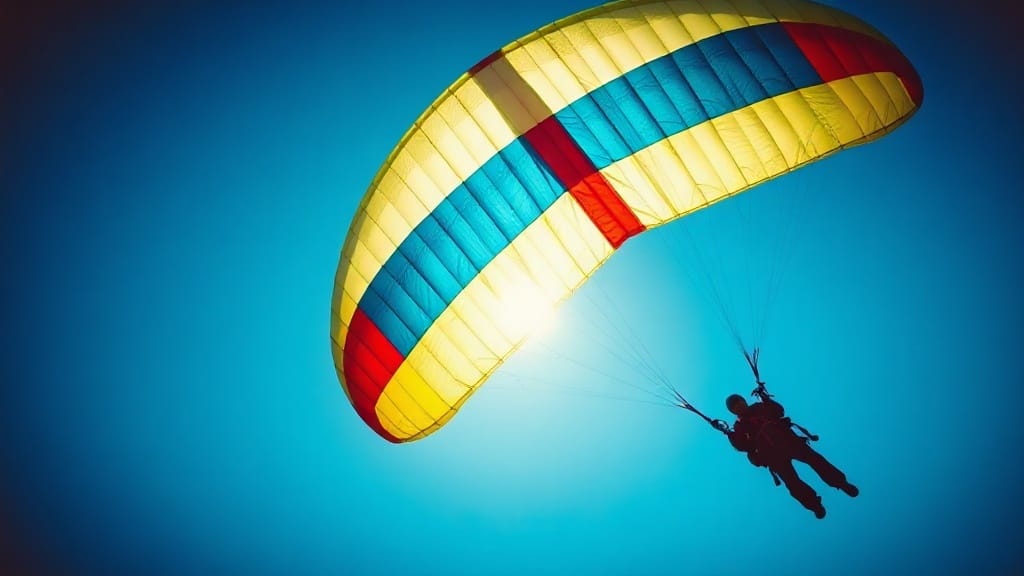
Expert guide for paragliding pilots.
Thermals cannot be seen — but their signs can. Reading thermals means assembling clues: terrain, sun, wind, clouds, birds and the behaviour of other gliders, then testing the hypothesis with your own wing.
Over Babadağ this skill is generously rewarded: the mountain produces so many well-marked thermals that it is one of the best places in the world to practise.
What experienced pilots watch:
Finding lift is half the job; staying in it is the other half. The classic rule: shift your circle toward the side where the climb is strongest — widen when lift improves, tighten when it fades.
Babadağ cores are usually wide enough for relaxed centring, which is why tandem pilots here can thermal smoothly even with passengers aboard.
Another glider climbing. It removes all guesswork — the lift is there, marked in real time. Birds are a close second.
Yes — it is a core part of pilot progression, and Babadağ's reliable, well-marked thermals make it one of the best classrooms anywhere.
Constantly — that is how a standard glide becomes a 30–45 minute flight. The passenger just enjoys the ride while the pilot works the sky.
Tandem flights all year round — daily in season (April–October), weather permitting in winter — one fixed $150 all-inclusive price. Book online or contact us directly.
